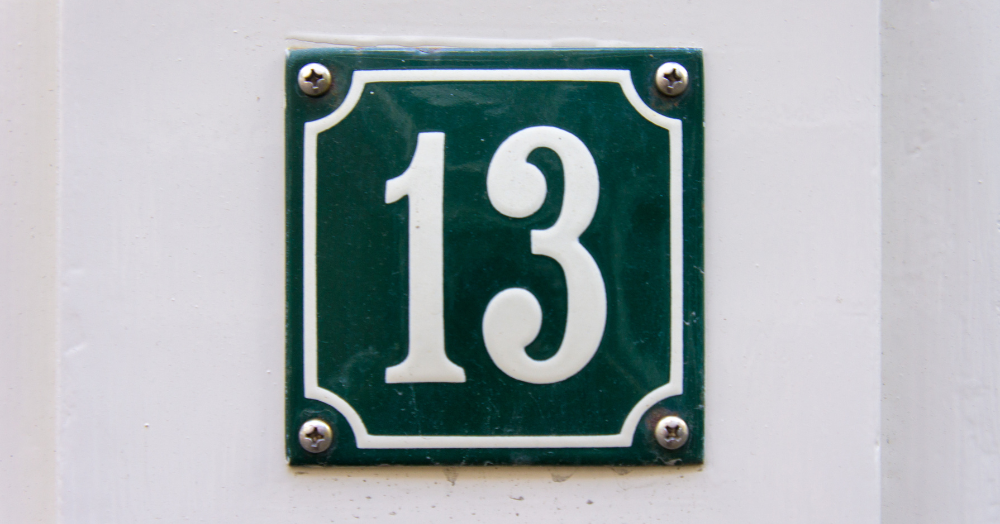
Number 13 - Unlucky for Some?! 🏡😱 What’s the impact of your house number on its value? 💰📉
Superstitious homebuyers seem to be avoiding moves on Friday the 13th 🙅♂️, but according to Rightmove, when it comes to house numbers, this could work in a buyers' favour! 🍀
Rightmove's analysis reveals that while Friday is typically the busiest day for home completions, Friday the 13th tends to be an exception. 🚪📅 Since 1996, Friday the 13th has consistently been the quietest day for home completions compared to any other Friday. 🧐
Additionally, the 13th day of the month is the least active for home completions, compared to any other day, according to the portal. The superstitions don't stop there —properties with the number 13 are valued on average £5,521 lower 😬 than the overall average home price of £364,139.

Top 10 cheapest house numbers
The analysis, which looked at over 10 million properties 🔍 with house numbers ranging from 1 to 100, shows that homes numbered 13 typically have the lowest valuations, indicating that some buyers may be deterred by the unlucky association. In contrast, houses numbered 1 are the most desirable 🏆, with an average value of £397,632—over £39,000 (or 11%) higher than the average. Properties with the number 7, considered a lucky number 🍀, average £369,770, about 3% higher than those numbered 13.

Top 10 most expensive house numbers
For buyers who aren’t swayed by superstition 💪, homes numbered 13 could provide a great opportunity to secure a property at a more affordable price 💡, turning the so-called unlucky number into a lucky bargain 🎉.